
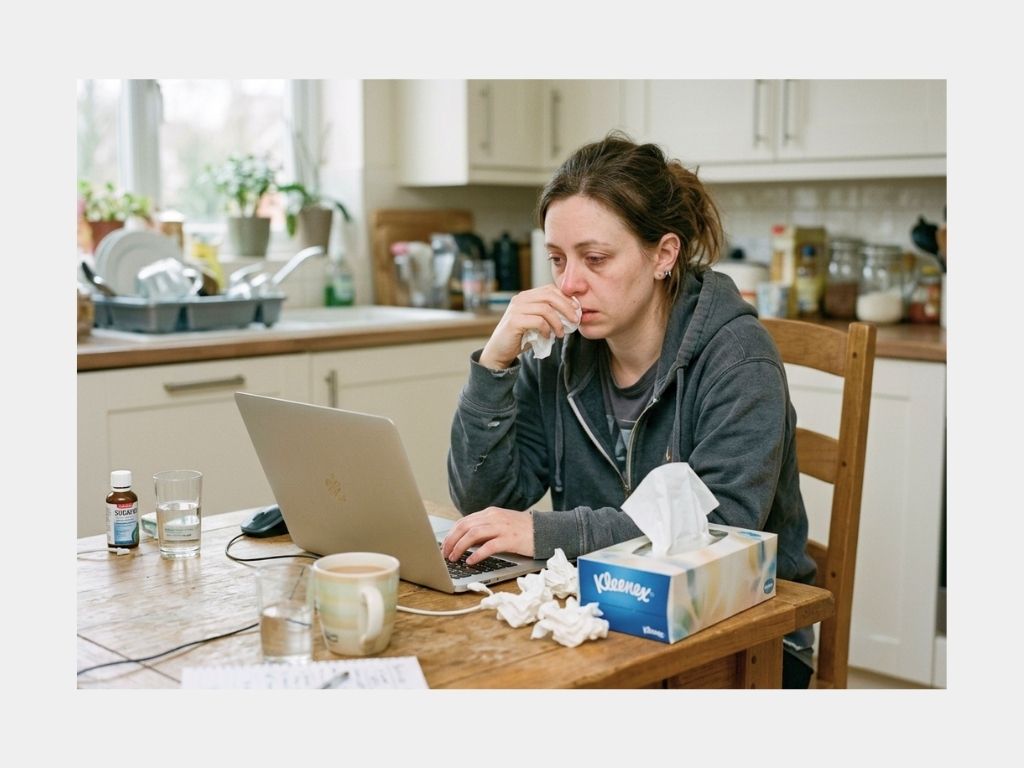
Working from home when unwell is one of the biggest issues our clients are facing right now. It's a timely topic too, with new legislation expected to grant Victorians the right to work from home two days a week, where their role can be reasonably performed from home.
The "I'm not feeling well so I'm going to work from home today" issue...
Why This Is Causing So Much Frustration
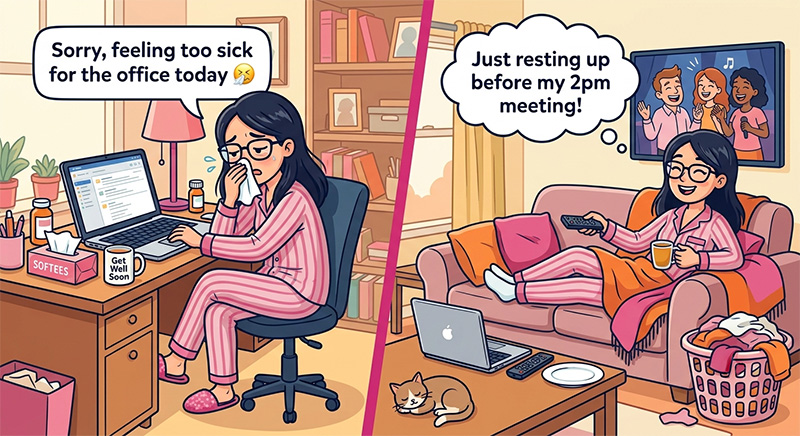
It's a complex issue because there are a number of factors to consider. Many of my clients are getting very frustrated with this common occurrence because there are factors for and against allowing it.
Why are they getting frustrated? Well, because:
- Often, employers lack confidence that the employee is really unwell. Instead, some employees may just be avoiding the office for other reasons. They want to do their laundry, they don't want the commute, or they simply prefer to stay home.
- If the person is genuinely unwell, then it is usually better for the employer to tell the employee to take a day of personal leave (sick leave) to rest and recover. HOWEVER – if the person only has a sniffle or a mild cold, they may just be choosing to not attend the office so they don’t pass on the infection but be perfectly fine to work at their normal capacity
- If the person is genuinely unwell, the business will likely get 20-50% productivity instead of 100%. They've paid for a full day's work but received far less in return.
- Employees are texting or calling with a declaration that they will WFH instead of asking permission, which frankly, is irking many employers
- Employees prefer not to use their sick leave if they can get away with working while unwell. This comes at a cost to the business
- Employees who work from home (or attempt to) while sick are less productive and take longer to recover, leading to longer periods of lower productivity
- Impaired cognitive function from medication or fever increases the likelihood of human error, impacting productivity and performance quality. Tasks completed while unwell are more prone to errors, requiring double the time and effort to review, correct and finalise
- Permitting people to work while they have declared they are unwell can create a toxic environment where other employees feel they must push on and perform work while ill (especially where a manager sets this standard)
What Is 'Workahomeism'?
In fact, scholars have even coined a term for this phenomenon: "Workahomeism", and their research has confirmed that there are indeed negative impacts for those who choose not to rest and recuperate when they are genuinely ill.
Some employers may think that "workahomeism" is better than taking sick leave, as employees are still working. However, the reality is that employees will not be performing at their optimal level, despite wanting to create an image of themselves being conscientious and hardworking.
For instance, when an employee is genuinely unwell and wanting to work from home, their brain can be foggy, they may need more frequent breaks and rests, and as a result, have lower productivity compared to when they are healthy and well. If employers work out the costs and return for the business in such a situation, they may be better off asking employees to take sick leave.
The Difficult Decision Employers Face
Of course, no employer can force an employee to take a period of sick leave, so if the employee insists on working, the employer faces a difficult decision:
Option A: Inform the employee that if they are not well enough to come to the office, they're not well enough to work at all, so they need to choose: attend the office as expected, or take a sick day. OR
Option B: Allow the employee to work from home, which sets a precedent and permits employees to work from home when unwell, potentially causing errors, lowered productivity and potentially contributing to creating a toxic work environment
A Real Solution: The Three-Day Office Minimum
One of my clients was facing this situation fairly frequently, so we had to come up with a solution, and eventually we did.
This particular client allows employees to work from home two days per week. Our solution? We updated our policy to change from allowing WFH 2 days, to insisting on office attendance at least 3 days. So! If someone wishes to WFH on a day they would usually attend the office, they forfeit their other scheduled work from home days to meet the minimum office attendance criteria.
So far, so good. This approach is working well for them.
Where This Leaves Employers
What's important is this: no employer has an obligation to allow an employee to work from home when they are unwell, just because they declare that they will. Each employer should weigh up the pros and cons and make a decision that is best for their business, and consider a wide range of factors including the short term and longer term implications. And you don't have to have one set rule. You may make a decision on a case by case basis, as long as you don't discriminate or apply favouritism when deciding!
Factors you can consider:
- The specific role the person does
- Any deadlines or special projects on hand
- Seniority of the person / role
- Other employee absences at the same time
- Work loads
- Probationary employees
- Apprentices or trainees
- Employee tenure
- General performance of the employee
Factors you can't consider:
- Age
- Gender
- Nationality
- Cultural background / religion
- If you like the employee or not
Ultimately, you decide whether to allow an employee to work from home when unwell. We definitely recommend updating your workplace policies to include reference to this issue, so your employees clearly understand the expectation and notification / request process.
If you have any concerns or wish for some support in updating your policies, don't hesitate to reach out because we're always here to help.
FAQs
Yes. No employer is obligated to permit working from home just because an employee has declared they'll do it. Employers can direct someone to take personal leave instead if they're genuinely unwell.
Workahomeism describes the trend of employees continuing to work while sick rather than resting. Research shows it leads to lower productivity, more errors, and longer recovery times, despite appearing conscientious on the surface.
If someone is genuinely unwell, taking personal leave to properly rest is usually the better outcome for both the employee and the business, rather than working at reduced capacity.
Yes. Some businesses have successfully changed their WFH policy from "you may work from home X days" to "you must attend the office a minimum of X days," which naturally limits ad hoc WFH-when-unwell requests.
It should clearly outline your notification and request process, whether prior approval is needed, and how decisions will be made consistently and without discrimination.