

We had a new starter commence with us this week, and it got me thinking about employee onboarding. As HR Professionals we know what we must do and what we should do as best practice to successfully onboard a new employee and run a smooth new starter induction, but maybe everyone doesn’t. So this week’s article walks through how to onboard a new employee the right way. From the paperwork you’re legally required to provide through to a full induction checklist you can use yourself.
How to Onboard a New Employee: What You Must Do and What You Should Do
Well, we’re pretty welcoming and good at our onboarding if I do say so myself. We have welcome flowers ready and a welcome sign. A morning tea or cake to share, to really make the person feel welcome. In fact, we spend a bit of time making sure a new employee’s first day is really special. You never get a second chance to make a first impression. We want to make a great first impression to our newbies, so they immediately feel glad that they chose to work with us!
History has shown us that when people feel valued and welcomed from their very first minute, they're much more likely to become a highly valued, productive, and high performing employee.
But I digress… back to what you must do:
New Employee Paperwork: What You Must Provide
If not completed prior to their start date, all employees should be provided with a tax declaration form, a choice of superannuation form and a form to complete their bank details to get paid.
We recommend some other paperwork (electronically or manually – doesn’t matter) too. Such as their emergency contacts, information on any allergies or medical conditions that you may need to be aware of. Also that you collect a copy of any relevant licenses that they need to perform their role.
Also, if you haven't provided them with an employment contract at the very least you must provide them with a letter advising them of what Modern Award or other Industrial Instrument governs their employment, and information on their classification.
It is not a legal requirement to provide employees with an employment contract (though it is best practice to do so), but you do have an obligation to advise them formally of the industrial instrument that they are governed by.
Orientation: The First-Day Essentials
On their first day, prior to commencing any work, they need to be shown around the premises, their workstation or area, be introduced to as many people as possible either in their own team / department or the whole business.
They need to be shown the Fire Evacuation plan and assembly point. Where the restrooms and lunchrooms are and shown any essential information such as safety protocols and safety standards.
Next, they should be provided with time to read and digest any workplace policies, and the relevant manager should spend time answering any questions they might have on the company policies.
Building a Thorough Induction Program
A thorough induction is more than just the few hours of orientation. A really great induction schedules time to do activities such as:
- Go through the position description and allow them time to ask questions and seek clarity
- Spend time with a range of people in the business on a range of topics, pertaining to them performing their role, as well as general company information that's helpful for a person to successfully settle in.
- Education sessions on company’s history, core values, mission / vision etc.
- Familiarity / training sessions on any company software / systems / filing protocols etc.
- A team lunch or morning tea for the new person to get to know their teammates in an informal setting
At HR Staff n’ Stuff, we allow four full weeks for any new starter to work through their whole induction program. This gives them time to digest information, keep learning and start working in the role at the same time (with support).
Assign an Induction Buddy
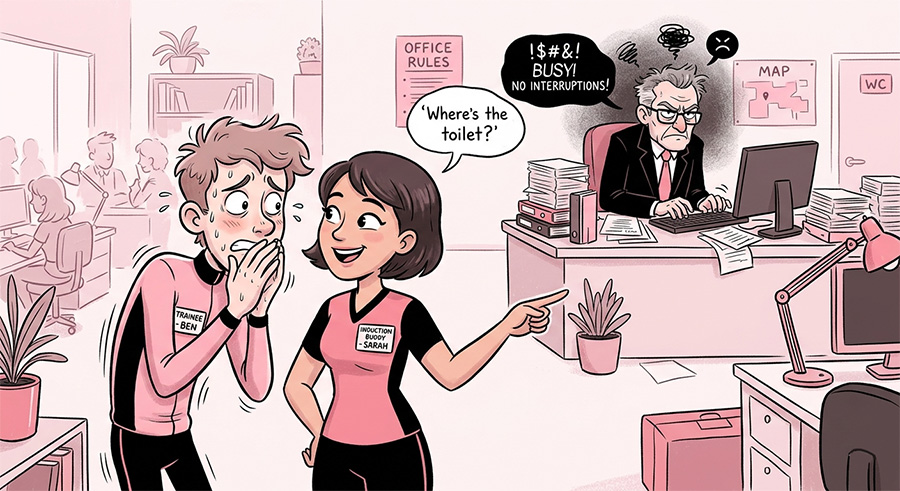
A new starter can be intimidated by needing to approach their manager with all of their questions – and they usually (and fairly) have a lot! Mostly they are ‘how do we do things around here?’ type questions. For this reason, we recommend appointing an ‘induction buddy’ for all new starters. There are a few great reasons for this:
- It ensures the workplace culture is passed on early
- It provides some time relief for the manager
- It provides the company buddy an opportunity to be selected – it’s a privilege to be trusted with imparting company knowledge and culture to a newbie; this can be used as a special project for a star performer
- It ensures the new starter has a person to go to with questions they feel uncomfortable asking their manager
Regular Review and Feedback
It’s vital to keep open lines of communication with new starters, and ensure regular catch ups and feedback. My usual approach is:
First week – 5 min catch up at end of each day as a check to see how they’re feeling
Second, Third and Fourth weeks – catch up for 15 mins mid-week and 30 mins each Friday to download the week and provide feedback and answer questions.
Then a monthly catch up until the end of the probation period - or more regulary as required.
Your New Employee Onboarding Checklist
Paperwork:
- Tax file number declaration form (add link)
- Superannuation form
- Bank details
- Emergency contacts
- Copies of licenses
- Allergies or medical conditions that the business should know
- Industrial Instrument and/or contract of employment
A thorough orientation and induction should include:
- Welcome and business introduction
- Administrative and compliance requirements (think systems / rules / OH&S etc.)
- Policies and procedures
- Role-specific training and task expectations (Position Description as a starting point)
- Workplace culture and team integration (use a Buddy to help)
- Tools, systems and access
- Review, feedback and ongoing support
To wrap up…
Workplace inductions introduce new workers to the business, the work environment, and the expectations that apply from day one. A well-structured induction process ensures employees understand how the workplace operates. What is expected of them, and how they can work safely while carrying out their duties.
An effective induction accelerates productivity by helping new workers understand their tasks, equipment, and procedures early. This reduces errors, minimises rework, and enables employees to contribute sooner. For smaller teams, where every person plays a critical role, a strong induction process can have a direct impact on service delivery and business performance.
Don’t see making time and space for a thorough orientation and induction as a pain or as a time-consuming issue. Setting up your employees the right way from the start ensures that the employee is ready for success – and that is important to you, the team, the newbie and the business! Setting the tone from the beginning is important. Start how you plan to proceed!
FAQs
No. It is not a legal requirement to provide an employment contract, though it is best practice to do so. You do, however, have an obligation to formally advise a new employee of the Modern Award or other Industrial Instrument that governs their employment, along with their classification.
Orientation is the first-day basics, showing the new starter around the premises, their workstation, the fire evacuation plan, restrooms and safety information, and introducing them to the team. Induction is the broader program that follows, covering the position description, company history and values, systems training, and time with different people across the business to help them settle in.
An induction buddy is an existing team member assigned to support a new starter. A buddy passes on workplace culture early, gives the manager some time relief, and gives the new person someone approachable to ask the "how do we do things around here?" questions they might feel uncomfortable raising with their manager.
Keep communication open with regular catch-ups. A good rhythm is a short five-minute check-in at the end of each day in the first week, then a 15-minute mid-week catch-up and a longer 30-minute Friday session in weeks two to four, moving to monthly catch-ups until the end of the probation period.