

This week I’ve done a bit of a dive into the workplace law changes coming down the line for employers from 1 July 2026. Some of these changes will require businesses to educate leaders and workers, update policies, or change processes, so I thought I’d get out in front of it and give you the heads up now.
Happy reading.
Cheers,
Deb
Update: the Fair Work Commission has now handed down its decision. Read our full breakdown of the 2026 award rate increases and Payday Super changes.
Workplace Law Changes Employers Need to Prepare for Before July 2026
There are a few changes on the horizon for the rest of 2026 that all employers need to be across.
1. Minimum Award Rates
As always, the Fair Work Commission (FWC) will apply an award increase for all Modern Awards, effective 1 July 2026. The increase will be announced in June (usually in the second half of the month) and all employers should be ready to check their employees’ rates of pay against the new award rate entitlements.
If you have any employees who are paid at, or slightly above, the award rate, you need to be alert for the announcement and apply it across all relevant employees, to ensure that all employees are paid at the minimum entitlement under the relevant award. It’s also a good time to ensure you have moved people to correct classifications where these are dictated by years of service. Please ensure you check changes in allowances as well, not just the base rate of pay.
Employers need to apply pay increases from the first pay cycle following 1 July.
If you need assistance in ensuring your employees are paid at the correct rates, please don’t hesitate to reach out to our team.
2. Superannuation Changes From 1 July 2026
From 1 July 2026, the Australian Government is changing when employers need to pay the superannuation guarantee contributions for their employees.
Currently, employers are required to remit superannuation contributions quarterly. From 1 July this year, employers will need to pay employee super contributions at the same time they pay salary or wages so that the contributions reach the employee’s nominated account within seven business days. (New starters are an exception: employers can make their first super contribution within 20 business days of paying their first wages or salary.)
We highly recommend all employers begin reviewing their payroll systems now to make sure you are ready. You may also need to speak with your payroll software provider, accountant or registered tax professional.
Remember, ignorance is no excuse for not complying with these changes, and the ATO (the primary enforcement agency for compulsory super) will be applying penalties, including an enhanced Superannuation Guarantee Charge (SGC), to companies who do not comply.
You can find more information on the ATO website here
A reminder that the final quarterly payment for the April to June 2026 quarter is still due by 28 July 2026.

3. Key Changes to Paid Parental Leave
From 1 July 2026, the Australian Government Paid Parental Leave (PPL) scheme will increase to a total of 26 weeks (130 days) for parents of children born or adopted after that date. This is the final stage of the scheme and adds two additional weeks to the entitlement.
The sharing of the PPL has also changed. For couples, the scheme sets aside four weeks for each parent. This means that more of your employees may choose to take longer periods of leave as these changes encourage the other (non-primary carer) parent to take up to four weeks of PPL.
All employers should update their Parental Leave policies to ensure they are compliant with the new rules.
4. Flexible Working Arrangements and Work From Home Laws
Recent legislative changes and a series of Fair Work Commission decisions have increased employees’ ability to obtain flexible working arrangements, including remote work.
Amendments to the Fair Work Act 2009 (Cth) have expanded the categories of employees who may request flexible working arrangements and enhanced the Fair Work Commission’s power to arbitrate disputes.
These changes have increased scrutiny on employers who refuse requests to work from home. In some cases, has seen the FWC overturn an employer’s decision.
Who Can Request Flexible Working Arrangements?
Currently, employees eligible to request flexible working arrangements include employees who:
- are pregnant
- are the parent, or have responsibility for the care, of a child who is of school age or younger
- are a carer (within the meaning of the Carer Recognition Act 2010)
- have a disability
- are 55 years of age or older
- are experiencing family and domestic violence, or
- are caring for or supporting an immediate family or household member who requires care or support because they are experiencing family and domestic violence
Full-time and part-time employees can request flexible working arrangements if they have completed at least 12 months of continuous service with their employer. Casual employees can do so if they have been working regularly and systematically for at least 12 months and there is a reasonable expectation of continuing employment on the same basis with the same employer.
Examples of Flexible Work Requests
Employees can request changes such as:
- changes in hours of work (change to start/finish times, reduction in hours etc.)
- changes in patterns of work (split shift or job-sharing arrangements)
- changes in location of work (for example, work from home or an alternate location)
From 1 September 2026, the Victorian Government is proposing new laws that would give employees the legal right to work from home for at least two days per week if they can reasonably perform their job remotely. Businesses with fewer than 15 employees would have a delayed start until 1 July 2027 under the proposed changes.
The proposed laws would exclude roles that require a physical presence, such as retail and hospitality workers, manufacturing, construction and health workers.
Employers would still be able to refuse a request on reasonable business grounds.
However, please note that this is not yet law. The Victorian Government plans to introduce legislation to the Victorian Parliament in July, with the proposal expected to be included within the Equal Opportunity Act.
Employers have raised several concerns about the proposed legislation, including::
- who bears the cost of any additional equipment employees will need?
- if employees use their own computer, how can work product be protected?
- will there be additional legislation around the implications of WorkCover when employees work from home?
- will employees be able to charge their employer for internet usage and so forth?
I will provide more information as it comes to hand on this specific topic.
For now, the recommendation is that all employers should prepare to allow some employees to work from home if their role can be performed remotely, and to start considering what your workplace policies might look like.
For example, until the legislation is passed, we do not know the level of detail involved, but employers may retain the right to dictate which days are worked from home.
Start considering those things now so that you are ready when the time comes.
5. Restrictions on NDAs in Workplace Sexual Harassment Cases
In November last year, the Victorian Parliament passed new legislation to restrict the use of non-disclosure agreements (NDAs) in settling workplace sexual harassment cases.
The Victorian Government recently indicated it intends to commence this reform from 1 July 2026.
Restrictions Under the Act
The Act aims to protect workers who experience sexual harassment and prevent employers from silencing victim-survivors by:
- prohibiting workplace NDAs unless the complainant requests them
- creating mandatory requirements for information statements and a review period before a worker signs an NDA
- prohibiting an employer from pressuring or influencing a worker to enter an NDA
- allowing a worker who has entered into an NDA to talk to certain people and bodies such as Victoria Police, and medical and legal professionals
- allowing a worker to end an NDA after 12 months of entering into it by giving notice to the other party
Effect of the Act
The stated purpose of the Act is to prevent employers from concealing sexual harassment in the workplace to protect the company name, prevent the disclosure of the perpetrator’s name or prevent the disclosure of any financial compensation paid to victim-survivors.
An unintended consequence of the Act may be that employers reduce the monetary offers of settlement they are prepared to make to complainants in sexual harassment cases because the employer cannot have confidence that the complainant will maintain the confidentiality of the settlement after 12 months has elapsed.
Please note that while the Government has stated that it intends for this Act to come into effect from 1 July 2026, it has not yet officially proclaimed the start date.
Both Victorian employers and national employers of workers in Victoria should understand the new restrictions on the use of NDAs in this regard.
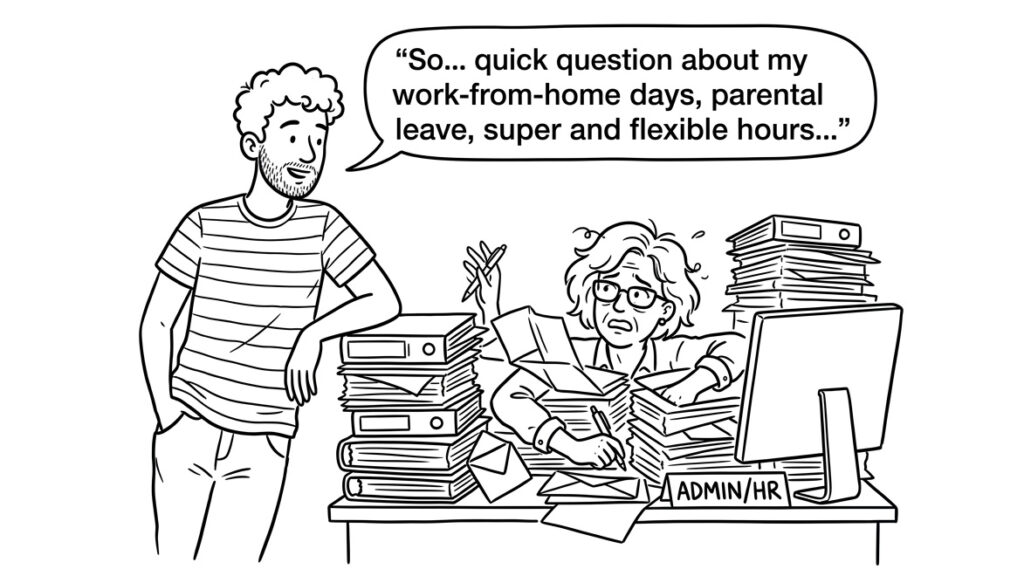
Summary of Workplace Law Changes for July 2026
There are quite a few changes to remember for 1 July this year. Here’s a quick recap:
The Fair Work Commission usually announces the rate in June. New rates applicable from the first pay cycle after 1 July. (National)
Yes. now paid alongside employees’ pay cycle, effective 1 July. (National)
Paid Parental Leave: increasing to 26 weeks, with each parent having four weeks on a use-it-or-lose-it basis. (National)
Work from home laws: proposed ability for many Victorian employees to work from home two days per week. Not yet confirmed at law. (Victoria only)
NDA restrictions: new limitations on NDAs in workplace sexual harassment cases. Commencement date likely 1 July but not yet proclaimed. (Victoria only)
Phew. That’s a lot of stuff for employers.
Along with running your business and dealing with increased costs, it can all feel a bit overwhelming.
If you need any support managing any of these changes, please don’t hesitate to reach out, because we’re always here to help.