

Updated May 2026
How to Stop Workplace Gossip Before It Destroys Your Team
You know that feeling when you're scrolling through Instagram and stumble on some celebrity drama? You stop, read all about it and probably send it to a friend with a shocked emoji. We've all been there.
Now take that same instinct and put it into a workplace where people spend forty hours a week together. The curiosity about each other's lives doesn't switch off when they walk through the office door. It's only natural that colleagues are interested in each other, and that they build connection by sharing parts of themselves. Casual workplace conversations are essential for relationships, belonging, and morale.
The problem isn't conversation. It's when conversation slides into something else.
Workplace gossip isn't just annoying. It's a slow culture killer. It destroys trust, tanks morale, increases turnover, and creates legal liability. The question isn't whether you have a gossip problem. The question is what you're going to do about it. And here's the thing most leaders miss: people don't gossip to be mean. They gossip because something's broken.
Key Takeaways
- Workplace gossip is almost always a symptom of something else: poor communication, unclear roles, unresolved stress, or perceived unfairness.
- Telling people to stop gossiping doesn't work. Addressing what's driving it does.
- Leaders set the ceiling. If you participate or tolerate it, your team will too.
- In Australia, persistent targeted gossip can meet the legal definition of workplace bullying.
Connection at Work Is Healthy. Gossip Isn't.
Before we dive into the doom and gloom, let's acknowledge something important. People need to connect at work to feel a sense of community, belonging, and purpose. And that's actually healthy.
Why Workplace Conversation Matters
In the workplace, where most of us spend a large portion of our time, these connections play a vital role in creating a positive environment. Friendly conversations allow colleagues to share ideas, discuss common interests, and even problem-solve in informal settings.
Employees having a chat is not necessarily about time wasting. Positive conversations in the workplace include:
Collaboration and idea sharing. Informal chats often spark the best creative thinking. Solutions to tricky problems frequently come up in the kitchen, not the boardroom.
Emotional support. When colleagues trust each other enough to talk openly, they can help each other through hard moments at work and outside it.
Stronger teams. People who know each other work better together. Connection makes collaboration easier.
Better morale. Friendly exchanges lift the mood. They make work a place people actually want to be.
The Line Between Connection and Gossip
There's a meaningful difference between "catching up with a colleague" and "tearing someone down behind their back." Your workplace should encourage the first and refuse to tolerate the second. The test is simple: would the person being talked about be okay hearing this conversation? If the answer is no, you've crossed into gossip.
Workplace gossip can quickly become a psychological hazard. It can drive bullying, gaslighting, and serious damage to mental health. That's not an overstatement. It's how thousands of workplace bullying claims start.
5 Ways Workplace Gossip Damages Your Business
Trust Evaporates
People feel unsafe. They start wondering "am I next" and "what's being said about me." Once that fear sets in, the team stops functioning as a team. Information gets hoarded. Honest conversations stop. Everyone covers their own back instead of collaborating.
Morale Tanks
Anxiety, embarrassment, anger. Even hearing rumours about others kills motivation. Your best people become disengaged and start looking for jobs elsewhere.
Productivity Plummets
Employees spend hours caught up in the drama instead of doing actual work. The targets of gossip spend even more time defending themselves or trying to figure out where they stand. It all adds up to a significant drag on output.
Conflict Multiplies
Gossip creates cliques, sides, and an "us versus them" mentality. Collaboration becomes nearly impossible. Cross-team work breaks down because nobody trusts the other group.
Your Wallet Gets Lighter
HR investigations, mediation, counselling support, turnover, lost productivity. We've seen businesses spend tens of thousands managing one situation that started as "just a bit of chatter." The financial cost is almost always far higher than leaders expect.
Why Smart People Gossip
People who would never describe themselves as gossips still end up in gossip conversations. Understanding why is the first step to stopping it.
Unclear Roles and Expectations
When people don't know exactly who's responsible for what, they start speculating about each other. "What does she actually do all day?" or "Why is he getting that project when I'm doing all the work?" These aren't malicious questions. They're symptoms of a structural gap.
Poor Communication From Leadership
When leadership doesn't share what's happening, the team fills the silence with rumours. An information vacuum is one of the most reliable predictors of gossip in a workplace. If your team doesn't know what's going on, they will absolutely make it up.
Unresolved Stress
When pressure builds and there's no healthy outlet, frustration leaks sideways as venting about colleagues. Gossip becomes a release valve. The behaviour isn't really about the colleague. It's about everything else.
Perceived Favouritism
When team members feel that decisions about pay, opportunity, or recognition aren't being made fairly, resentment finds an outlet. That outlet is usually talking about the person who seems to be getting preferential treatment. Favouritism at work and impartial leadership covers this dynamic in more depth, but the short version: fix the favouritism and a big chunk of the gossip disappears with it.
Connection Gaps
Sometimes gossip is just how people connect when they don't have anything else in common. Talking about a third party feels safer than talking about yourself. This is why teams with strong genuine connection gossip less. They don't need the third-party content to bond.
The solution isn't to shut people up. It's to address what's driving the gossip in the first place.
We've broken this down visually below. This is what we typically see happening behind the scenes.
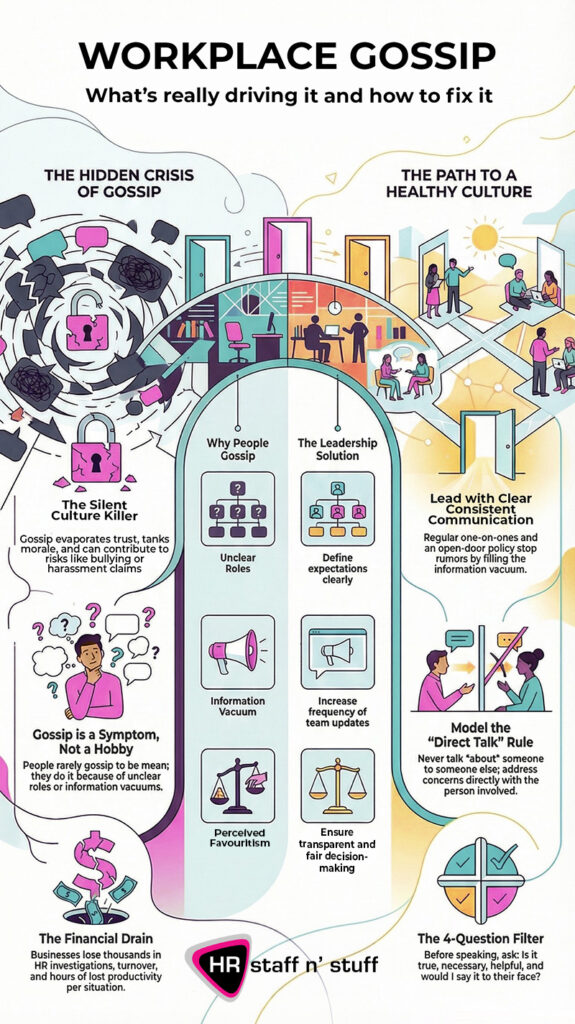
5 Strategies to Stop Workplace Gossip
The biggest mistake leaders make is thinking gossip is inevitable. It's not. Address what's driving it and you can shift the pattern significantly.
1. Communicate Like You Mean It
Open, transparent leadership stops gossip at the source. Regular one on ones, team meetings, and a genuine open door policy give employees somewhere to raise real concerns instead of spreading rumours about them. If your team doesn't know what's happening, they'll make it up. Don't let them.
This is especially important during change. When restructures, redundancies, or strategic shifts are happening, the rumour mill goes into overdrive. Get ahead of it with clear, frequent communication, even when you don't have all the answers.
2. Create the Right Kind of Social Opportunities
Employees want to bond with colleagues. Give them healthy ways to do it. Team lunches, shared activities, milestone celebrations, even short coffee catch ups. Connection built through shared experience beats connection built through shared complaints every single time.
3. Model the Behaviour You Want
This one is on you. If you gossip, your team will gossip. However, if you're respectful and solutions focused, they'll mirror that. If you let gossip slide when you see it, you're endorsing it.
The rule: don't triangulate. Don't talk about a person to someone else. If you have a problem with someone, address it with them directly. The same standard applies to your team. Gossip and undermining behaviour often travel together, which is why silent undermining and passive aggressive behaviour needs the same direct leadership approach.
4. Invest in Communication Skills
Many people gossip because they don't know how to handle conflict or raise difficult issues directly. Give them the tools. DiSC assessments, conflict resolution workshops, and communication training aren't luxuries. They're investments in culture. The cost of training is significantly lower than the cost of unresolved interpersonal damage.
5. Address It Head On, With Compassion
When gossip surfaces, deal with it immediately but thoughtfully. The person spreading it might be struggling, feeling powerless, or trying to process something they don't have the tools to handle directly. Listen first. Then set clear expectations.
The behaviour you walk past is the behaviour you accept.
Phrases to Shut Down Workplace Gossip
Most leaders know they should address gossip but freeze when it actually happens. Having a few phrases ready makes it easier to respond in the moment instead of going along with it.
When someone starts gossiping to you: "Have you raised this with them directly?" This redirects without judgement. It puts the responsibility back on the speaker and makes clear you're not the right audience.
When you want to exit a conversation: "I'm going to step out of this one. It feels like it's heading somewhere unhelpful." Neutral, non-accusatory, and clear. You're not shaming anyone. You're just leaving.
When you're a leader and someone brings you gossip: "What outcome are you hoping for by telling me this?" This is powerful because it forces the speaker to articulate their intent. If the answer is genuine (they want help with a real problem), you can address it. If they can't answer, the conversation usually ends on its own.
When you need to address it as a manager: "I've heard there have been some conversations about Sarah. I want to make sure we're handling this the right way. Can we talk about what's going on?" Direct without ambush. Names the issue. Opens space for the real concern underneath.
When you want to set a team-wide standard: "Our rule is that if you've got a problem with someone, you talk to them first, not about them. If you need help having that conversation, come to me." Clear expectation. Offered support. No grey area.
What to Do If You're the Target of Workplace Gossip
Not everyone reading this is a leader. If you're the one being talked about, here's how to handle it.
Document what's happening. Keep a private record of what's being said, when, and by whom. This protects you if it escalates and you need to involve HR.
Address it directly if it feels safe. A calm, non-confrontational conversation with the person spreading the gossip is often enough. "I've heard you've been saying X. I'd like to talk about what's going on" is a reasonable opening.
Escalate if it doesn't stop or feels unsafe. Raise it with your manager or HR. Bring your documentation. If your workplace doesn't have internal HR, an external consultant can help mediate.
Don't retaliate. Spreading counter-rumours weakens your position and undermines any later complaint. Stay above it, even when it's hard.
Look after your wellbeing. Persistent workplace gossip is genuinely damaging to mental health. If it's affecting how you feel about work, treat it as a workplace safety issue, not a personal failing.
Is Workplace Gossip Illegal in Australia?
Gossip itself isn't illegal. But it can lead to real legal consequences when it crosses into specific territory.
Under the Fair Work Act, repeated unreasonable behaviour towards a worker that creates a risk to their health or safety can meet the legal definition of workplace bullying. Persistent gossip targeting a specific person, particularly when it affects their mental health or job, can fall under this definition. The Fair Work Commission can make orders to stop the bullying, and the business can be held responsible if it allowed the behaviour to continue.
Defamation is the other risk. False statements that damage someone's reputation can lead to defamation claims, particularly when they're shared in writing (email, Slack, text) or to a wider group of people. Australian defamation law has been tightening in recent years, and employers can be drawn into claims if the gossip happened in a work context.
Harassment and discrimination claims are also possible if the gossip relates to a protected attribute like race, gender, sexuality, disability, or family responsibilities.
The takeaway: even when gossip doesn't formally cross any legal line, the risk of letting it continue is significant. Most claims start with patterns of behaviour that were tolerated for months before they escalated.
The Bottom Line
Workplace gossip isn't inevitable. It's not something you just have to tolerate. It's a symptom of broken systems, and like any symptom, you can address what's causing it.
Stopping workplace gossip starts with understanding what's driving it. Is it stress? Poor communication? Unclear roles? Perceived favouritism? Once you know the root cause, you can actually fix it.
Your team wants to belong. They want to matter. They want to do good work surrounded by people they trust. Give them that environment, and gossip fades on its own.
If gossip is rampant in your workplace and morale is low, you don't have to figure it out alone. The team at HR Staff n' Stuff helps Australian businesses build healthier workplace cultures. We can diagnose what's driving the gossip, equip your team with better communication tools, and create accountability systems that actually work.
Get in touch for a confidential conversation about stopping the gossip in your organisation.
Still dealing with workplace gossip in your team?
These are some of the most common questions we get from employers:
FAQs About Workplace Gossip
Workplace gossip is informal conversation about colleagues that's speculative, negative, or not based on facts. It crosses the line when it damages someone's reputation, creates division in the team, or shares personal information that wasn't theirs to share. Friendly chat about weekends or shared interests isn't gossip. Talking behind someone's back about their performance, relationships, or perceived flaws is.
Employees gossip when there's an information vacuum, unresolved frustration, or a lack of trust in leadership. Common triggers include unclear roles, poor communication from management, perceived favouritism, and workplace stress. Gossip is rarely about being malicious. It's usually a symptom of something else that hasn't been addressed, which is why simply telling people to stop rarely works.
Gossip itself isn't illegal, but it can lead to legal consequences when it crosses into defamation, bullying, or harassment. Under the Fair Work Act, repeated unreasonable behaviour that creates a risk to health or safety can meet the definition of workplace bullying. False statements that damage someone's reputation can also lead to defamation claims, particularly if shared in writing or to a wider group.
Stopping workplace gossip starts with addressing what's driving it. Improve communication so there's no information vacuum to fill. Set clear behavioural expectations and call out gossip when you see it. Model the behaviour you want by never participating yourself. Give your team tools to handle conflict directly. The behaviour you walk past is the behaviour you accept.
HR should get involved when gossip becomes targeted, repeated, or starts affecting someone's wellbeing or performance. Casual chatter doesn't usually need HR. But when rumours are about a specific individual, when they involve sensitive topics like performance, health or relationships, or when they're contributing to a broader culture problem, HR or an external HR consultant should step in to investigate and reset expectations.
Direct, non-judgemental phrases work best. Try "Have you raised this with them directly?" or "I'm going to step out of this conversation." If you're a leader, "What outcome are you hoping for by telling me this?" reframes the chat productively. The goal isn't to shame the person. It's to redirect the conversation back to something useful.
Document what's being said, when, and by whom. If it feels safe, address it directly with the person spreading it. If it doesn't, raise it with your manager or HR with your documentation in hand. Don't retaliate or spread counter-rumours, because that weakens your position. If the gossip is affecting your mental health or job, treat it as a workplace safety issue.
Yes. When gossip is repeated, targets a specific person, and creates a risk to their health, safety, or job, it can meet the legal definition of workplace bullying in Australia. Even when it doesn't formally cross that line, it should be treated seriously. Persistent gossip about an individual is one of the most common forms of psychosocial hazard in modern workplaces.