
Burnout is not just something that happens in big corporates or high-pressure industries. It is becoming increasingly common in small and mid-sized businesses too.
When you are running lean, and everyone is wearing multiple hats, it can be very easy for stress to build up quietly in the background. One person is covering extra duties. Another is answering emails after hours. A manager is trying to keep the team moving while putting out fires all day.
Before long, people are not just busy. They are exhausted.
As business owners and leaders, it is important to recognise the early signs of burnout and take practical steps to protect your people, your culture and your business.
What is workplace burnout?
Burnout is a state of emotional, mental and physical exhaustion caused by prolonged stress. It often happens when employees have been “pushing through” for too long without enough recovery time, support, clarity or recognition.
It is not just having a bad week. Burnout tends to build over time.
An employee experiencing burnout may seem flat, withdrawn, overwhelmed, cynical, disengaged or constantly tired. They may still be turning up to work, but they are not really coping. That is when employers need to pay attention.
The difference between stress and burnout
Stress is often short-term and situational. It might come from a tight deadline, a busy trading period, a tricky client issue or a sudden staffing problem.
Burnout is more chronic. It develops when stress is ongoing and there is no real chance to recover.
The World Health Organization describes burnout as an occupational phenomenon resulting from chronic workplace stress that has not been successfully managed. It is commonly associated with exhaustion, increased mental distance from work, negativity or cynicism, and reduced professional effectiveness.
In simple terms, stress can feel like “I have too much to do.”
Burnout can feel like “I can’t keep doing this.”
Why burnout matters for employers
Burnout does not only affect the individual employee. It can affect the whole workplace.
Poor mental health and unmanaged workplace stress can contribute to absenteeism, presenteeism, reduced productivity, higher turnover, conflict, lower morale and poorer decision-making. Safe Work Australia also notes that workers exposed to psychosocial hazards are at greater risk of developing work-related psychological injuries and poorer mental health outcomes.
For small and mid-sized businesses, this can hit especially hard. When one person is struggling, the workload often spills onto someone else. Then the pressure spreads through the team like glitter in a carpet. Quietly. Everywhere. Impossible to ignore once you finally notice it.
Common causes of workplace burnout
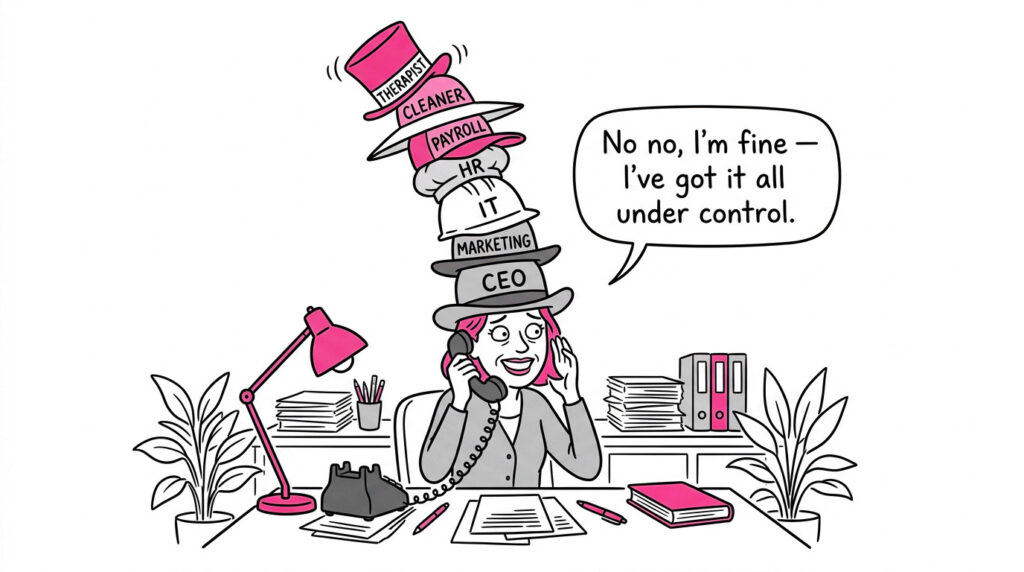
Burnout can stem from a range of workplace issues including:
Wearing too many hats
Employees may be juggling multiple roles without clear boundaries or enough support.
Under-resourcing
Workloads grow, but the team does not. This can leave people constantly trying to catch up.
Always being “on”
Blurred lines between work and home, after-hours emails and constant availability can make it difficult for employees to switch off.
Lack of recognition
In busy workplaces, wins can go unnoticed. Over time, that can make people feel undervalued.
Reactive leadership
When managers are always putting out fires, wellbeing conversations and workload planning can fall to the bottom of the list.
Lack of control
Employees can become overwhelmed when they have little say over their tasks, workflow, priorities or responsibilities.
Poor behaviour or unsafe culture
Bullying, harassment, gossip, exclusion, poor accountability and disrespectful behaviour can all increase psychological strain.
Workplace burnout and psychosocial hazards
Burnout is also closely linked to psychosocial hazards at work.
Psychosocial hazards are things in the design or management of work that can increase the risk of psychological or physical harm. These may include high job demands, low job control, poor support, lack of role clarity, poor organisational change management, remote or isolated work, poor workplace relationships and exposure to traumatic material.
Under model WHS laws, a person conducting a business or undertaking must manage the risk of psychosocial hazards in the workplace, so far as is reasonably practicable.
That does not mean employers are expected to control every personal stressor in someone’s life. But it does mean businesses need to look carefully at the way work is structured, managed and supported.
Prevention is better than cure
There are practical steps employers can take to reduce the risk of burnout in the workplace.
1. Normalise conversations about wellbeing
Encourage open conversations and check in regularly. This does not mean prying into someone’s personal life. It means creating enough trust that employees can speak up when something is becoming unmanageable.
A simple check-in can make a difference:
“Are you managing okay with your current workload?”
“Is anything getting in the way?”
“Do we need to reprioritise anything?”
“Is there something you need from me?”
The earlier you catch an issue, the easier it is to do something useful about it.
2. Set clear priorities
When resources are limited, everything can start to feel urgent. That is when leaders need to step in and help sort the “must do today” from the “can wait until next week.”
Employees should be able to speak honestly about what is on their plate. This is especially important when they have multiple people giving them work, each with their own version of urgent. Clear priorities reduce stress, improve productivity and help people focus on the work that matters most.
3. Create structure and clarity
A well-structured workplace helps reduce confusion, role overlap and unnecessary pressure.
Useful tools include:
Organisational charts
These help employees understand who does what, where they fit and who they go to for support.
Clear reporting lines
When everyone knows who they report to, it creates accountability and makes it easier to escalate concerns early.
Defined goals
Employees are more likely to stay engaged when they know what is expected of them and how their work contributes to the bigger picture. SMART goals can be a useful framework.
Position descriptions
Accurate and up-to-date position descriptions help prevent scope creep and unrealistic expectations. They are also useful when assessing workloads and identifying whether more support is needed.
Regular one-on-one meetings
These give employees a dedicated space to talk through priorities, roadblocks and support needs. Done well, they can stop small issues becoming much larger ones.
4. Encourage breaks and boundaries
Healthy work habits need to be modelled from the top. If leaders are sending emails late at night, skipping lunch, working through leave and praising people for being constantly available, the team will take the hint.
Encourage people to take proper breaks. Support employees to use their annual leave. Be mindful of after-hours communication. Make sure workloads are realistic, not just technically possible if someone gives up their evenings.
Boundaries are not a luxury. They are part of sustainable performance.
5. Recognise effort, not just outcomes
Recognition does not have to be complicated. A simple “thank you”, a public shout-out, a private note of appreciation or acknowledging someone’s effort in a team meeting can go a long way.
People are far more likely to stay engaged when they feel seen and valued. This is especially true during busy or difficult periods when the work may feel relentless.
6. Support your managers
Managers can often be stretched too. They are balancing their own workload while also supporting the needs of their team. Give managers the tools and training to recognise the early signs of burnout, manage workload conversations and handle wellbeing issues appropriately.
Managers do not need to be counsellors. But they do need to know how to listen, respond, document concerns where appropriate, and escalate issues before they become more serious.
7. Foster a safe and respectful workplace
A respectful workplace is not just good practice. It is part of creating a psychologically safe workplace.
Poor behaviour, harassment, bullying, exclusion and unsafe power dynamics can all contribute to stress and burnout. The Respect@Work report highlighted the link between workplace sexual harassment and broader workplace issues such as poor culture, lack of accountability and unsafe power dynamics.
To help build a safer and more respectful workplace:
- Set clear behavioural expectations through policies, training and leadership role-modelling.
- Make sure employees know how to report concerns safely.
- Act promptly and fairly when issues are raised.
- Take gossip, undermining behaviour and bullying seriously.
- Build a culture where people feel safe to speak up.
Preventing harassment and bullying protects individuals, but it also helps create a workplace where people feel valued, safe and supported. That is a strong buffer against burnout.
The impact of personal situations
It is also important to remember that burnout is not always only about work.
Personal circumstances such as caring responsibilities, financial stress, grief, health issues or mental health challenges can affect how someone copes at work.
Employers cannot control what is happening in someone’s personal life, but they can create a supportive and respectful workplace.
This is where access to an Employee Assistance Program can be valuable. An EAP gives employees a confidential space to speak with a professional about personal or work-related issues, often before things reach crisis point. The Fair Work Ombudsman also lists EAPs and other mental health and wellbeing supports as useful options for people dealing with workplace stress.
Burnout is not a personal failure
Burnout should not be treated as a weakness or a personal failure. In many cases, it is a sign that something in the workplace needs attention. That might be workload, structure, staffing, communication, behaviour, support, priorities or leadership habits.
The good news is that burnout can often be prevented.
When employers take burnout seriously, they do more than protect their people. They build stronger teams, better culture and a more resilient business.
If you would like help reviewing your workplace practices, supporting your managers or creating practical strategies to reduce burnout risk in your team, please give HR Staff n’ Stuff a call. One of our HR specialists can help.
If your workplace also needs support with respectful workplace training, our Respect@Work workshop can help your team understand appropriate behaviour, reporting obligations and your business compliance responsibilities.
Frequently Asked Questions about Workplace Burnout Prevention
Early signs may include ongoing exhaustion, irritability, withdrawal, reduced performance, increased mistakes, cynicism, absenteeism or a noticeable change in behaviour. Employers should look for patterns rather than one-off bad days.
Burnout can be linked to psychosocial hazards, which employers have a duty to manage under work health and safety laws. This includes looking at workload, support, role clarity, workplace behaviour and other factors that may create psychological risk.
Employers can reduce burnout risk by setting clear priorities, managing workloads, supporting managers, encouraging breaks, recognising effort, creating role clarity and fostering a respectful workplace culture.
Yes. Personal stress can affect how someone copes at work. While employers cannot manage an employee’s personal life, they can provide a supportive environment and consider options such as flexibility, workload adjustments or access to an Employee Assistance Program.
Small businesses often run lean, which means employees may cover multiple roles or work under pressure for long periods. Without clear priorities, support and boundaries, burnout can build quickly.