

Updated April 2026
The Problem Everyone's Avoiding
You know that feeling when you're scrolling through Instagram and you stumble on some celebrity drama? You stop, you read, you probably send it to a friend with a shocked emoji. We've all been there.
Now take voyeurism into real life and factor in how much time we spend with our colleagues.
It’s only natural that we are curious about their personal lives and that we connect by sharing confidences about ourselves. Workplace conversations are essential for building relationships, creating bonds, and fostering a sense of belonging among employees. Casual chats can enhance camaraderie and make the workday more enjoyable.
In fact, these connections can boost morale, promote collaboration, and even improve productivity. However, when these conversations shift from friendly interactions to harmful gossip it can become a pretty significant problem.
Workplace gossip isn't just annoying. It's a silent killer. It destroys culture, tanks morale, increases turnover, and creates legal liability. The question isn't whether you have a gossip problem. The question is: what are you going to do about it?
People don't gossip to be mean. They gossip because something's broken.
The Good News: Connection Matters
Before we dive into the doom and gloom, let's acknowledge something important. People need to connect at work to feel a sense of community, belonging, and purpose. And that's actually healthy.
In the workplace, where most of us spend a large portion of our time, these connections play a vital role in creating a positive environment. Friendly conversations allow colleagues to share ideas, discuss common interests, and even problem-solve in informal settings.
Employees having a chat is not necessarily about time wasting. Positive conversations in the workplace include:
- Collaboration and idea sharing: Informal conversations can spark creativity and collaboration. Team members often come up with new ideas or solutions through casual discussions.
- Emotional support: When employees feel comfortable talking with one another, they can offer emotional support during stressful periods, furthering a sense of mutual trust and understanding.
- Building stronger teams: Connections formed through positive interaction help create a more cohesive team. Employees who know each other well are more likely to work harmoniously together.
- Improving morale: Simple, friendly exchanges can lighten the mood and contribute to a positive work atmosphere. This can lead to greater job satisfaction and employee retention.
The impact of workplace gossip
There’s a big difference between ‘catching up with a coworker’ and ‘tearing someone down behind their back’.
It’s important that your workplace encourages personal connection, but is clear that it doesn’t tolerate workplace gossip…
Workplace gossip can quickly become a psychological hazard in the workplace, leading to bullying, gaslighting and have a negative impact on someone’s mental health.
5 Ways Gossip Is Killing Your Workplace
1. Trust evaporates People feel unsafe. They wonder: "Am I next? What are people saying about me?" A fractured team can't function.
2. Morale tanks Anxiety, embarrassment, anger. Even hearing rumours about others kills motivation. Your best people become disengaged and start looking for jobs elsewhere.
3. Productivity plummets Employees spend hours caught up in drama instead of actually working. The targets of gossip spend even more time trying to defend themselves.
4. Conflict multiplies Gossip creates cliques, sides, and an "us vs. them" mentality. Collaboration becomes nearly impossible.
5. Your wallet gets lighter HR investigations, mediation sessions, counselling, turnover, lost productivity. We’ve seen businesses spend thousands in HR time, lost productivity, and turnover… all from one situation that started as ‘just a bit of chatter.’
Why Smart People Gossip
Common culprits:
- Unclear roles → People speculate about what others are (or aren't) doing
- Poor communication from leadership → Information vacuum gets filled with rumours
- Workplace stress → Frustration comes out as venting
- Perceived favouritism → Resentment finds an outlet
The solution isn't to shut people up. It's to address what's driving the gossip in the first place.
We’ve broken this down visually below. This is what we typically see happening behind the scenes.
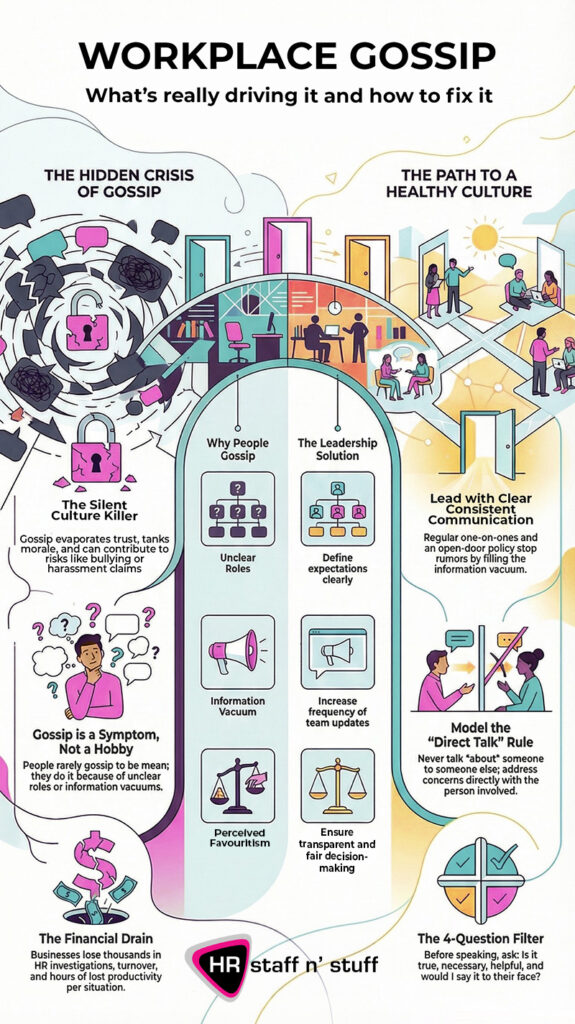
5 Proven Strategies for Stopping Workplace Gossip
The biggest mistake leaders make? They think you can't stop workplace gossip. Wrong. You can... if you address what's actually driving it. Here's how:
1. Communicate Like You Mean It
Open, transparent leadership stops gossip at the source. Regular one-on-ones, team meetings, and an "open door" policy give employees a safe place to raise real concerns instead of spreading rumours.
Action step: If your team doesn't know what's happening, they'll make it up. Don't let them.
2. Create Social Opportunities (The Right Way)
Employees want to bond with coworkers. Give them healthy ways to do it: team lunches, activities, events. Connection through shared experience beats connection through shared complaints every time.
3. Model the Behaviour You Want
Leaders, this is on you.
If you gossip, your team will too. When you're respectful and solutions-focused, they'll follow. If you let gossip slide? You're endorsing it.
The rule: Don't triangulate. No talking about someone to someone else. Address concerns directly. Full stop.
4. Invest in Communication Skills
Many people gossip because they don't know how to handle conflict or communicate difficult things. Give them the tools. DiSC assessments, conflict resolution workshops, and communication training aren't luxuries. They're investments in culture.
5. Address It Head-On (With Compassion)
When gossip surfaces, deal with it immediately, but thoughtfully. The person gossiping might be struggling or feeling powerless. Listen first. Then set clear expectations.
Remember: The behaviour you walk past is the behaviour you accept.
The Bottom Line: You Can Stop Workplace Gossip
Workplace gossip isn't inevitable. It's not something you just have to tolerate. It's a symptom of broken systems: Poor communication, unclear expectations, unaddressed stress, and leadership that doesn't intervene.
Stopping workplace gossip starts with understanding what's driving it. Is it stress? Poor communication? Unclear roles? Perceived favouritism? Once you know the root cause, you can actually fix it.
Your team wants to belong. They want to matter. They want to do good work surrounded by people they trust.
Give them that environment, and gossip will fade away on its own.
If this is happening in your team, don’t ignore it. It doesn’t go away on its own.
If your workplace culture is struggling and morale is low, gossip is rampant, or people just aren't connecting, you don't have to figure it out alone
The team at HRSS specialises in stopping workplace gossip by building healthy cultures from the ground up. We can help you:
- Diagnose what's driving the gossip
- Equip your team with better communication tools
- Create accountability systems that actually work
- Build a workplace where people want to be (and stay)
Let's talk about stopping the gossip at your organisation. Get in touch for a confidential conversation.
Still dealing with workplace gossip in your team?
These are some of the most common questions we get from employers:
FAQs About Workplace Gossip
What is considered workplace gossip?
Workplace gossip usually involves informal conversations about colleagues that are speculative, negative or not based on facts. While casual conversation is normal, gossip crosses the line when it damages someone’s reputation or creates division within a team.
Why is workplace gossip harmful to a business?
Workplace gossip can reduce trust, impact morale, and lower productivity. It often leads to conflict, increased staff turnover, and in some cases, legal risk if false or damaging statements are made about employees.
How do you stop workplace gossip?
Stopping workplace gossip starts with strong leadership. Clear communication, setting expectations, addressing issues early, and creating a culture of respect all play a role. It’s also important to understand what’s driving the behaviour, such as stress or poor communication.
Why do employees gossip at work?
Employees often gossip when there is uncertainty, poor communication, or frustration in the workplace. It can also stem from unclear roles, perceived unfairness, or a lack of trust in leadership.
Can workplace gossip lead to legal issues in Australia
Yes, in some cases workplace gossip can lead to legal risks, especially if it involves false statements that damage someone’s reputation or contribute to bullying or harassment claims under workplace laws.