

Favouritism at work is one of the fastest ways to lose your team's trust, and most leaders don't realise they're doing it. You don't have to be playing obvious favourites for the damage to set in. A slightly warmer tone with one person. The same name landing on the visible projects. A bit more patience for the people who think like you do. That's all it takes for the rest of the team to start switching off.
Impartial leadership is the discipline of catching those patterns before they take root. It's not about being robotic or pretending you don't have preferences. It's about making sure those preferences don't drive your decisions. This guide covers what impartial leadership actually looks like, why favouritism is so costly, and seven practices you can start using this week.
Key takeaways
- Favouritism is usually unintentional, but the damage to trust and morale is the same either way.
- Impartial leadership means applying consistent standards while adapting how you support each person.
- Clear written criteria, deliberate input gathering, and self awareness are the practical foundations.
- Teams notice fairness, and they notice its absence even faster.
What is impartial Leadership?
Impartial leadership is the commitment to evaluate every decision, every team member, and every situation on merit and principle rather than personal preference. It means being aware of your natural affinities without letting them drive how you lead.
It doesn't ask you to suppress who you are. You'll click better with some people than others. Some personalities will be easier to work with than others. That's just being human. The point is to notice those preferences without being controlled by them, and to build a workplace where everyone feels fairly treated regardless of how naturally they happen to land with you.
That foundation of trust is where real team performance begins.
The real cost of favouritism at work
When leaders show favouritism, intentionally or not, the consequences spread quickly.
Morale collapses. When the team sees some members as the "golden ones," the rest disengage. They stop believing their effort matters, and motivation drops off. Before long, your team is just going through the motions.
Trust breaks down. If your team suspects decisions are based on who you like rather than what's best for the business, they stop trusting your judgement. Communication becomes guarded. Innovation withers. Collaboration dies on the vine. Once trust starts slipping, other quiet problems tend to follow, including silent undermining and passive aggressive behaviour that's much harder to spot but just as damaging.
You end up with a team of followers. Favouritism quietly creates echo chambers. When you only weight input from your preferred people, you lose the diversity of perspective that produces good decisions. A team that only says yes to you sounds appealing for about a week, until you realise the best ideas have stopped surfacing.
In our consulting work with Melbourne businesses, the pattern we see most often isn't dramatic favouritism. It's small, repeated signals. Who gets pulled aside for the casual chat. Whose questions get the longer answer. Whose missed deadline gets a knowing smile instead of a conversation. Those signals add up faster than leaders think.
7 practices to lead without favouritism
Building the habit of fairness
Impartiality isn't a personality trait. It's a skill, and it's built through specific habits. The seven practices below aren't theoretical. They're the things fair leaders do consistently, often without thinking about it, once the habits are in.
1. Start with self awareness
You can't manage biases you haven't acknowledged. Take time to notice who you naturally connect with and why. Maybe you favour analytical thinkers because you think analytically. Maybe you gravitate toward extroverts because you're more reserved yourself. These preferences are normal. They're also blind spots.
The moment you can name them, you can work around them. The honest question to ask yourself: Am I evaluating this idea on its merits, or am I leaning toward it because it came from someone I like?
2. Define clear, written criteria
Vague standards invite bias. When you're explicit about how decisions get made, whether that's project assignments, promotions, or recognition, you remove ambiguity. If Jeff gets the high visibility project, it's not a mystery. It's because his KPIs, client feedback and track record earned it.
Written criteria don't just prevent favouritism. They prove to your team that fairness is a real principle, not a slogan.
3. Actively seek input from everyone
It's easy to listen to the voices you like. The harder, more important work is pulling input from the quiet ones, the dissenters, and the people who challenge you.
In meetings, make space deliberately: "I want to hear from everyone, let's go around the room." Notice who dominates conversations and consciously open room for others. Your team will quickly work out whether you actually listen to all opinions or only the ones from your inner circle.
4. Customise support, not standards
Fairness isn't the same as sameness. One team member might be detail focused but struggle with strategy. Another thinks big picture but gets lost in execution. You don't treat them identically. You coach them differently while holding them to the same standards.
This is impartiality at its finest. You flex how you support people, never on what's expected of them.
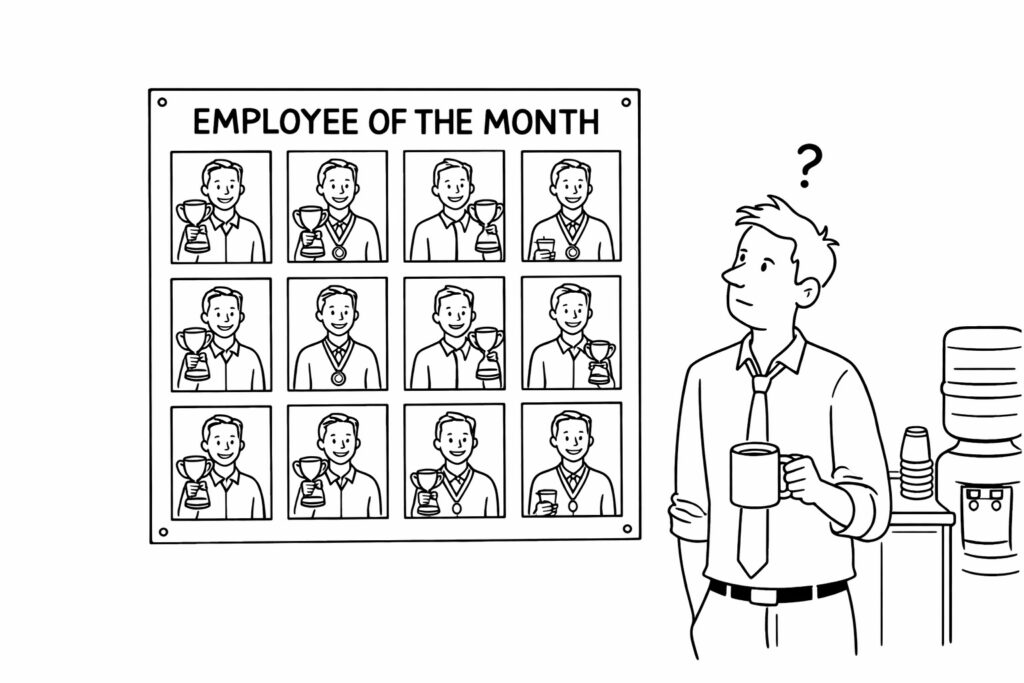
5. Address perceived favouritism head on
Leaders don't always see how their actions look from the outside. When a team member raises a concern, listen without defensiveness, try to understand their perspective, and take corrective action if it's warranted.
Say someone feels you favour another person for high visibility projects. Don't brush it off. Acknowledge the feeling, explain your reasoning, and ask how you can ensure fairness going forward. Often a candid conversation clears the misunderstanding. And sometimes, uncomfortably, the feedback turns out to be fair. Take a moment to genuinely reflect. Is there merit in what they're saying?
6. Be ruthlessly consistent
Consistency doesn't mean rigidity, but it does mean your team can predict how you'll act. You have a deadline policy. A high performer misses a deadline without flagging it, you still address it, even if you do so with the context of their track record.
A struggling team member makes the same mistake, you have a more direct conversation, but the accountability is still there. Same values, applied uniformly, even when it's uncomfortable. That's what credibility looks like.
7. Watch for bias in praise and criticism
Some people thrive on public recognition. Others cringe at it. Good leaders adapt how they deliver praise, never whether they deliver it.
Recognise everyone. The extrovert, the introvert, the loud contributor, the quiet achiever. The difference is in the delivery, not the decision. The same rule applies to criticism. Tie feedback to performance, not personality fit.
Why impartial leadership matters more than ever
Workplace expectations around fairness, transparency and inclusion are higher than they've ever been. Teams are more aware, more vocal, and less willing to tolerate inconsistency. When leaders aren't seen as fair, trust breaks down fast. And once it's broken, it's slow to rebuild.
Impartial leadership is what holds everything else together. It creates stability, builds trust, and gives your team confidence that decisions are being made for the right reasons.
The ripple effect
This is the long-term impact of impartial leadership in action. When a leader commits to impartiality, the benefits extend far beyond day-to-day fairness. You create an environment where people show up with full energy, knowing their contributions will be judged fairly. That builds a culture where the best ideas win, not the ones from the "right" people. It also helps you attract and retain talent because your team knows they have a genuine shot at growth.
More importantly, you model behaviour that ripples through your entire organisation. When your peers and direct reports see a leader who's honest about their biases and disciplined about overcoming them, they do the same. Fairness becomes cultural.
The path forward
Impartiality won't make you the most popular leader in the room. It will make you the most trusted. The leader whose decisions stick, whose team stays, and whose business holds steady through change.
Next time you're deciding on a promotion, a project assignment, or whose voice gets heard in a meeting, pause. Ask whether you're choosing on principle or preference.
That pause is where impartial leadership begins.
Need help building fairer leadership practices into your team? Get in touch with HR Staff n' Stuff. We work with Melbourne businesses to build workplaces people actually want to stay in.
Frequently Asked Questions
Favouritism at work is when a leader consistently gives preferential treatment, whether that's better opportunities, more recognition, or lighter accountability, to certain team members based on personal preference rather than performance. It's often unintentional, which is part of what makes it so damaging.
Favouritism itself isn't illegal, but it can cross into unlawful territory when it's based on a protected attribute under the Fair Work Act or anti-discrimination legislation. That includes things like age, gender, race, disability, or family responsibilities. Even when it's not illegal, favouritism creates real legal risk through bullying claims, constructive dismissal, and discrimination complaints.
Look for patterns rather than individual moments. Who consistently gets the high visibility projects? Whose ideas do you back without questioning? Whose mistakes do you excuse, and whose do you address? If the same names keep coming up across those questions, you have a pattern worth examining. Asking your team directly, anonymously if needed, is the fastest way to find out.
A good working relationship is a connection that doesn't influence how you make decisions about pay, opportunity, recognition or accountability. Favouritism is when that connection starts shaping those decisions. The test is whether someone else with the same performance would be treated the same way.
Start with a private, non defensive conversation. Acknowledge the perception, explain your decision making criteria, and genuinely ask whether there's something you've missed. If the feedback has merit, change the behaviour visibly, not just the explanation. Trust is rebuilt through consistent action, not better justification.
Document specific examples with dates and context. Raise it directly with your manager first if it's safe to do so. Often they're genuinely unaware. If that doesn't work or isn't appropriate, escalate to HR or a senior leader. An external HR consultant can help mediate if the situation is too embedded to resolve internally.