

Personal Phone Calls at Work: What Employers Can Direct
I started working a long time ago. It wasn't quite the era of dinosaurs, but smoking in the office was perfectly acceptable (hard to imagine now). It was well before mobile phones, email, and the internet.
Fast forward to today and things look very different. Instead of waiting by a fax machine, we're standing at our desks, tapping away, accessing files in the cloud and communicating instantly.
And somewhere in all of that, personal phone use at work has quietly changed too.
How Personal Phone Calls at Work Have Changed
Technology has reshaped how we communicate and how employees work. In the past, most workplaces only had landlines, so personal calls were obvious. Anyone within earshot could hear your late-night excuses to Mum.
These days, employees fire off texts constantly, and it's almost impossible to tell what's work and what's not. Public humiliation averted. We can now text our retorts to Mum's questions in private, which is exactly where things can start to blur.
For employers, the question has shifted. It's no longer about whether staff make the occasional personal call. It's about whether personal phone use is quietly taking over the working day.
Can Employers Direct Personal Phone Use at Work?
The short answer is yes, and a Fair Work Commission case has made it clear.
In Lynda Murphy v Clear Day Pty Ltd [2022] FWC 373, the Commission upheld the dismissal of a health, safety, environment and training manager whose personal phone use had spiralled out of control. Ms Murphy had started running a Farm Stay business on her property shortly after commencing her role, and it had grown quickly. Airbnb bookings, caravan travellers, phone enquiries — all being managed while she was meant to be doing her actual job.
Her employer sat her down and gave her a clear direction to turn her phone off during working hours and stop managing her Farm Stay business on company time. That direction was lawful and reasonable.
She followed it for about a week.
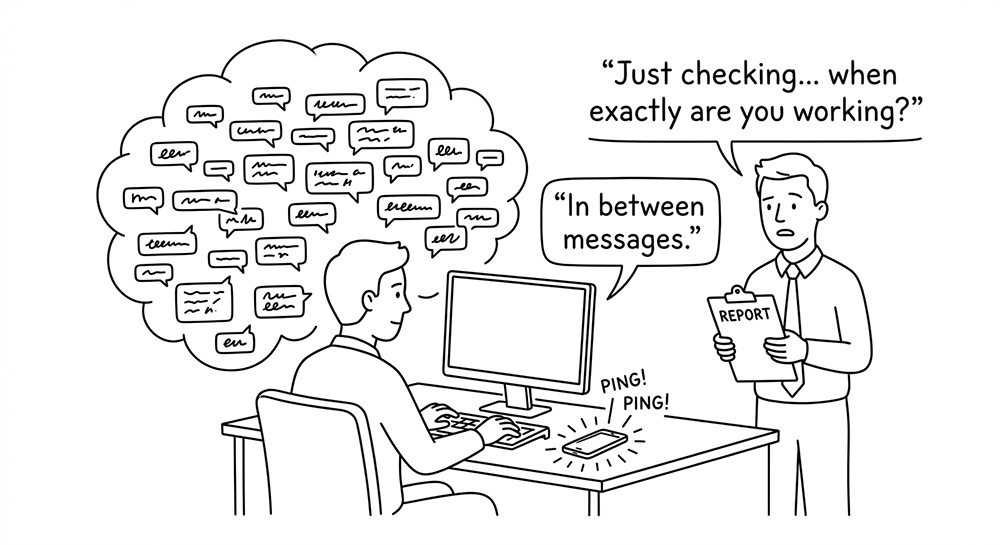
Over the following weeks, she sent more than 1,000 text messages during work hours. On one occasion, 73 messages in four and a half hours. Another day, 76 messages in seven hours.
Commissioner Jennifer Hunt described the volume as "extraordinary and unacceptable" and said it was "impossible to believe" any meaningful work had been done.
The dismissal was upheld.
Why the Case Matters for Employers
People often quote this case for the sheer volume of messages, but the important legal point sits underneath that.
The Commission didn't uphold the dismissal simply because Ms Murphy had been texting a lot. It upheld the dismissal because she had deliberately failed to follow a lawful and reasonable direction from her employer.
That distinction matters.
Fair Work will generally support an employer who gives a clear, reasonable instruction and follows a fair process when the employee ignores it. It won't support an employer who tries to dismiss someone for a first offence, or who never made expectations clear in the first place.
Even in the Murphy case, the Commission noted that the employer should have given a written warning rather than just a verbal one, and should have offered her a chance to respond before dismissing. Those procedural gaps didn't change the outcome here because the underlying conduct was so serious, but in a less clear cut case they easily could have.
What Counts as a Lawful and Reasonable Direction?
A direction is lawful when it doesn't require the employee to do anything illegal or breach their employment contract or an award. It's reasonable when it fits the nature of the role, the workplace, and the circumstances.
Asking a warehouse team to keep phones in lockers for safety reasons is reasonable. Directing a customer service team not to text while on calls is reasonable too. Instructing an employee to stop running a competing side business during work hours, as in the Murphy case, is very reasonable.
Give your direction clearly, be specific about what needs to change, and put it in writing so no one can debate the details later.
Setting Clear Policies and Expectations
At HR Staff n' Stuff we prefer to be on the front foot in areas like this. Clarity about your expectations around employee behaviour is vital.
A good personal phone use policy will typically cover:
- Whether you allow reasonable personal communication during work hours, or whether phones must be off and accessed only during breaks
- Any safety-based restrictions specific to your industry or role type
- Expectations around employees managing personal business or side hustles on company time
- What happens when someone breaches the policy, and what your process looks like
Your policy might be strict or relatively relaxed depending on your workplace. What matters: you keep it clear, you communicate it, and you apply it consistently. That's what protects you if something ever ends up in front of Fair Work.
Whether you need help managing an employee's failure to follow reasonable direction, or you want to put policies in place that support a positive and productive workplace, HR Staff n' Stuff is here when you need us. Contact us for a chat about your business.
FAQs: Personal Phone Calls at Work
In most workplaces, yes. Most workplaces accept occasional personal calls, provided they're brief, reasonable, and don't affect work performance or others around them. Many employers limit personal calls to break times or genuine urgent situations, and most set this out in a workplace policy.
Yes, provided the rule is lawful, reasonable, and clearly communicated to staff. Complete bans are most common in safety-sensitive roles (construction, manufacturing, healthcare), customer-facing environments where phones cause distraction, and workplaces where phone use creates a genuine risk. If you're introducing a total ban, put it in writing, explain the reason, and apply it consistently to everyone.
Yes. From a Fair Work perspective, texting is still time and attention away from work. The Murphy case dealt almost entirely with text messages rather than voice calls, and the Commission treated them as equivalent conduct.
There's no set number of messages or calls that automatically counts as excessive, and the law doesn't define it. In practice, phone use becomes excessive when it prevents an employee from meeting the ordinary duties of their role, when it continues after a clear direction to stop, or when it involves running a personal business during work hours. Employers should focus on the impact on work, not just the volume.
Yes, but rarely for a single incident. Dismissal is typically only defensible when an employer has given a clear direction, the employee has ignored it, and the conduct is affecting the business. A written warning, an opportunity for the employee to respond, and clear documentation of the conduct all strengthen an employer's position significantly.
You don't legally have to have one, but you'll be in a much stronger position if you do. A clear policy sets expectations up front, gives you something to point to when raising concerns, and protects you if someone ever challenges a dismissal. Without a policy, you're relying on general standards of reasonable conduct, which is harder to enforce consistently.
You can't access an employee's personal phone records directly, but Fair Work can order an employee to produce them in an unfair dismissal claim, as happened in the Murphy case. What you can and should do is document your own observations of phone use during work hours: how often, how long, what work the employee did or didn't complete, and any warnings you gave.
Reasonable flexibility for genuine caring responsibilities is expected and often protected under the Fair Work Act. This is a good example of why a rigid, no-exceptions phone policy can create problems. A better approach is to set clear default expectations and address genuine needs on a case-by-case basis.
Start with a conversation, not a formal warning. Raise your concerns clearly, explain what you're observing, listen to their response, and give a specific direction about what needs to change. Follow that conversation up in writing so there's a record. If the behaviour continues, that written trail becomes important if you need to take further action.