

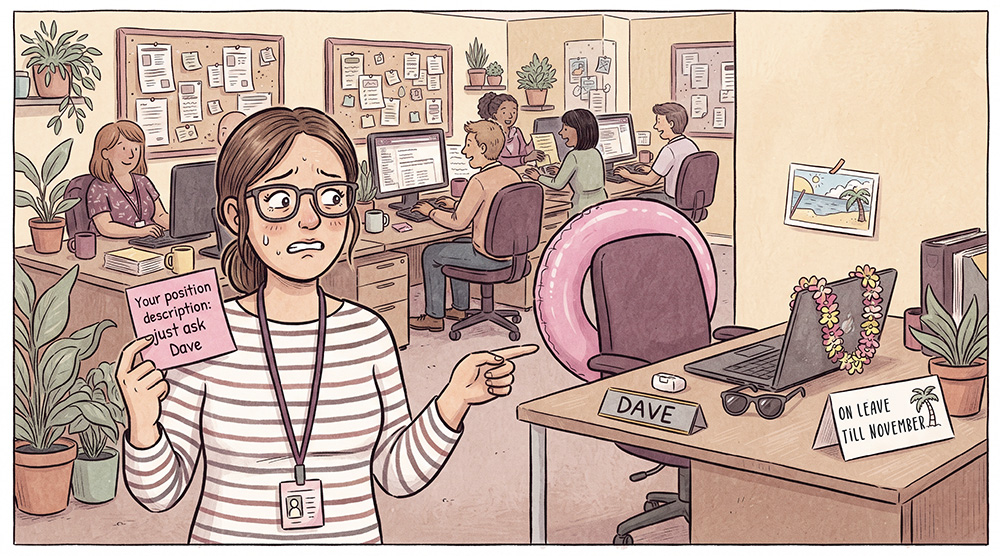
Running a business takes up a lot of time and the last thing a lot of business leaders want to be doing is to get caught up in creating positions descriptions, which they generally see as an admin task that takes too long.
Instead, the business gets their more experienced staff to teach the new employees the ropes. Before we know it, leaders assume that employees just know what they’re supposed to be doing and as a result, the task of completing Position Descriptions ends up getting pushed down the priority list and eventually forgotten about.
However! After years of working in HR, I’ve seen firsthand just how much value a well-crafted Position Description can bring to a business and its employees, often in ways that go beyond the obvious one of role clarity.
Why Position Descriptions Deserve a Spot at the Top of Your List
Here are some reasons to make creating up-to-date Position Descriptions a priority:
Reduce Psychosocial Risks
In one of our previous blogs we outlined common psychosocial hazards. One being poor role clarity which essentially means an employee may be unclear of their duties, expectations, responsibilities or who they report to.
This uncertainty may lead to anxiety for some employees; for others, it may start to make them feel disengaged or unmotivated due to not understanding how their role matters or fits into the big picture. Ultimately, this can reduce productivity for the business and lead to psychological injuries as well as potential claims.
Position Descriptions give employees something to refer to which clearly outlines in black and white their duties, responsibilities and reporting lines, and in some instances it may even include KPIs.
We also recommend including the company values or expected behaviours in a Position Description as well – so it includes what they must do, and how they must behave.
Compliance
Figuring out the most appropriate award and classification for an employee, to ensure you meet your obligations with regard to pay and entitlements can sometimes be tricky, especially if you haven't clearly defined the role.
Position descriptions will usually set out the tasks, duties, responsibilities, experience and qualifications that a role requires. These are some of the key details that you need to classify correctly, so having position descriptions in place makes life a whole lot easier when it comes to tackling this task.
A PD also helps protect a business from any employee-related claims or disputes about misclassifications and underpayments, as it acts as evidence of what you expect from an employee and what you hired them to do.
Recruitment and Selection
Position descriptions act as a useful tool for recruitment and selection because they provide a clear picture of exactly what the job entails and the criteria candidates need to meet. Understanding what you want the person to do, and what skills, knowledge and experience you want them to have, assists in writing a compelling job ad that attracts the most suitable candidates.
If you’re not clear on what you want, how can you employ the right person in the first place?
Return to Work and Capability Assessment
Most businesses have had to deal with injuries in the workplace, and whether work-related or not, you have an obligation to provide employees with a safe working environment and avoid putting them in a position that may aggravate their injury.
Too often in these situations, there is not enough information from the doctor about what is safe or not safe for the employee to do or whether they should even be at work. A big challenge is that medical practitioners may not always be able to fully understand the day-to-day activities of a role based on a job title, and even though the employee may be able to provide this information, crucial details can be missed.
This is another reason position descriptions are great. They give treating practitioners a clear picture of the role, helping them make informed decisions in relation to an employee’s capacity and adjustments you may need to make.
Performance Management
Performance issues are always best addressed as soon as they are recognised but sometimes a conversation may not be enough and a more formal performance management process may be necessary.
Positions Descriptions can be incredibly helpful to set clear benchmarks to assess performance. They remove any grey areas around what you expect from the employee, leaving no room for excuses such as "I was not aware", "that was not made clear to me" or "it’s not part of my role". Position Descriptions ultimately better position employers to effectively facilitate performance processes.
You may be wondering what it takes to make sure a Position Description is well crafted and fit for purpose. The answer is not always the same for every business but as a baseline, a Position Description should include:
- A position purpose – to explain why the position exists and the value it brings to the business
- Key responsibilities – the main tasks, duties and responsibilities of the role
- Reporting lines – who does the position report to and does the position have any direct reports?
- Skills, qualifications and other requirements – what are the essential criteria to be able to perform the role
- Inherent physical and psychosocial demands – clearly outlining the physical and psychosocial demands of a role (this one is particularly useful when it comes to managing injuries and even claims)
Some other practical tips include:
- Use clear and simple language – we want it to serve its purpose and not overcomplicate it
- We recommend a maximum of 2-3 pages. A PD does not need to list every single task – it should give a really great overview of the role
- Conduct regular reviews and updates to ensure the document reflects the role as it exists today, not how it looked five years ago
- Make it accurate! I think this one speaks for itself
- Highlight that an employee's role isn't limited to what's in the position description. Include a sentence such as "you may be required to perform other tasks as directed by management"
Consider This Your Friendly Reminder
In the grand scheme of running a business, Position Descriptions might not be the most exciting documents you'll ever create, but they certainly bring a lot of value. From recruitment and compliance to performance management and return-to-work processes, a well-crafted Position Description provides clarity, consistency and confidence for everyone involved.
Taking the time to get them right, and keeping them up to date, can save countless hours, reduce risk, and support better business decisions.
So, if your Position Descriptions have been sitting on the "to do" list for a while, consider this your friendly reminder to get them done! Reach out to HR Staff n’ Stuff if you’d like us to assist with developing Position Descriptions for your business 😉
Because we’re always here to help!
FAQs
There's no general legal requirement to have one. But a clear position description makes it much easier to meet the obligations you do have, like classifying employees under the right award and managing psychosocial risks in your workplace.
The employment contract sets out the terms of employment, such as pay, hours and notice. The position description explains the role itself: what the person does, who they report to and what you expect of them. The two work best together, and many contracts refer to the position description.
Keep it to two or three pages at most. It doesn't need to list every task. It just needs to give a clear, accurate overview of the role.
Review them regularly, ideally once a year and any time a role changes. An outdated position description can cause as many headaches as not having one at all.
Yes. It gives doctors and treating practitioners a clear picture of what the role actually involves, including its physical and psychosocial demands. That helps them make better decisions about what the employee can safely do and what adjustments might be needed.