

Sometimes, it’s who you know
Nepobaby is THE insult in Hollywood at the moment. Anyone who has a family connection in ‘the biz’ seems to be having their success downgraded because they got a leg up because of who they know. It doesn’t seem to matter that the individual may actually be truly gifted. The fact that mum or dad is an actor negates everything.
But is that fair? And is nepotism such a bad thing?
Whether it’s bringing in a cousin to help during a busy period, hiring a friend’s son for their first job, or transitioning a family member into the business, most SMEs will encounter it at some point.
And sometimes? It works brilliantly. But sometimes, it quietly chips away at trust, culture, and performance.
The difference usually comes down to how it’s handled.
Why nepotism occurs in the first instance
In small to medium businesses especially, hiring isn’t always a long, structured process. Decisions are often made quickly and based on trust.
Common reasons include:
- I know them, so I trust them
Hiring someone familiar feels lower risk than taking a chance on an unknown candidate. - Speed and convenience
When you need someone yesterday, tapping into your network can be a faster process. - Family business dynamics
In many businesses, involving family isn’t just common, it’s expected. - Assumption of loyalty
There’s a belief that people with personal ties will go the extra mile.
None of these are inherently wrong, but they can create an uneven playing field and employees will notice.
The upsides and some very real downsides
Like most things in life, nepotism is not ALL bad, nor is it always a great idea. There are pros and cons.
The upside:
- Faster hiring and onboarding
- Built-in trust and alignment
- Potential for longer term commitment
- Stronger continuity in family-run businesses
The downside:
- Perceived unfairness - “Why did they get that job, I’ve been here for years and it was promised to me!”
- Reduced morale and engagement – “Why bother, the boss's daughter will take the job when she wants it.”
- Awkward (or avoided) performance conversations – you have to share Christmas dinner with that person so you avoid the difficult conversation for the sake of family harmony.
- Risk of favouritism, both real or assumed
- Losing good people who feel overlooked
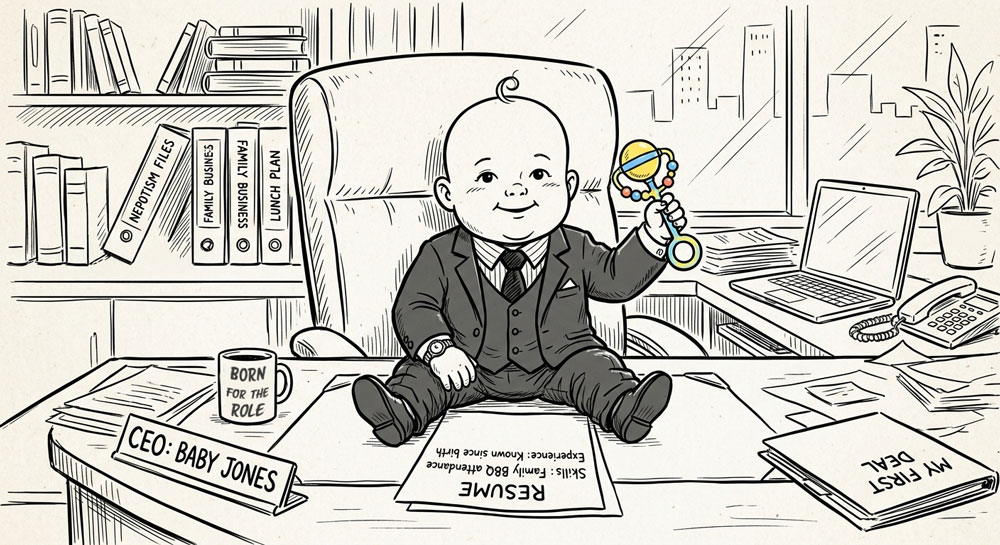
The key point to note is that it’s not just about what’s fair, it’s about what looks fair. After all, perception helps drive culture.
Set it up properly from day one
If you’re hiring someone with a personal connection, the worst thing you can do is pretend it doesn’t exist. Ignoring the elephant in the room is going to cause more headaches than it’s worth when the truth is uncovered – and the truth always comes out eventually.
Instead:
1. Be transparent where appropriate
You don’t need to over explain, but don’t hide the connection either. Secrecy breeds suspicion and undermines trust.
2. Be clear on why they were hired
Spell out their skills, experience, and what they bring to the role. Make the merit visible and stop the gossip before it starts.
3. Define boundaries early
Clear role descriptions, reporting lines, and decision-making authority are essential.
4. Avoid direct reporting relationships
If possible, don’t have them reporting to the person they’re connected to. It rarely ends well. It also feeds mistrust as others feel they have nowhere to go if they have a concern relating to the person brought in through family connections.
5. Treat onboarding like any other hire
Same process, same expectations, same standards. First impressions matter and as you would be aware, your team is always watching closely.
Ongoing management – where the problems occur
This is where many businesses slip. The issue isn’t the person hired, it’s usually what happens after.
To keep things on track:
- Hold them to the same standards
Same KPIs, same feedback style and format, same accountability. Keep that playing field level and fair. - Don’t avoid tough conversations
If performance drops, address it early, not six months too late because it feels uncomfortable. And certainly, don’t ignore it and hope it will go away because it won’t! Remember that Christmas dinner? You’ll likely be brimming with frustration that may spill over while they dig into their pudding. - Document decisions
Promotions, pay rises, and performance outcomes can be challenging when you have a family member you are grooming for succession as their rise to the top, along with their remuneration, may reflect the future they have and the family owned nature of the business. But documenting decisions can be helpful if issues arise down the track. - Create a buffer if needed/possible
Use another manager or HR support for performance management or sensitive discussions.
If other employees see “different rules,” trust erodes quickly and you can say goodbye to your positive work culture and probably your best performers as they won’t sit by and allow double standards to impact them and their career for too long.
Protect your culture!
A great workplace culture doesn’t just disappear overnight. It is something that generally occurs subtly and over time. If you don’t manage the introduction and management of a “connected” employee, you may see:
- Quiet disengagement
- Reduced discretionary effort
- “What’s the point?” thinking
- High performers looking elsewhere
However, you can minimise the impact:
Keep things transparent
Explain decisions where appropriate and don’t let people fill in the gaps themselves. The imagination can be very destructive when it wants!
Ensure equal opportunity
Development, promotions, and projects should be accessible to everyone. And let’s be honest, it’s better for your business if you make sure the right people are being developed, promoted, and so forth. Cousin John may be great in the warehouse but unleash him in a management role and you might kiss your successful business goodbye.
Give people a voice
Create safe, informal ways for employees to raise concerns.
Train your leaders
Bias (conscious or not) creeps in easily and awareness matters.
To be fair, all of the above should be followed whether or not you hire your wife’s sister. Culture isn’t damaged by one hire; it’s damaged by repeated inconsistency.
Compliance is always important
Of course there are compliance considerations. I know – boring – but they matter when it comes to protecting your business and avoiding trouble. The real risks if nepotism isn’t managed well can include:
- Unfair recruitment practices
- Perceived or actual discrimination
- Conflict of interest issues
- Challenges to promotion decisions
You don’t need corporate-level bureaucracy, but you do need:
- A simple, clear recruitment policy
- A conflict of interest guideline
- Consistent documentation of decisions
Think of it as protection for both the business and your people.
A practical reality check
In many family-run or closely held businesses, it’s not uncommon for family members to step into leadership roles, often ahead of employees who have been with the business longer or bring more experience. This can be a deliberate and valid decision, particularly when it aligns with long-term succession planning, trust, and the future direction of the business. After all, leadership in these environments is often about more than capability alone, it’s about legacy, control, and continuity.
However, these decisions need to be managed carefully. Without clear communication, visible capability, and consistent expectations, they can create frustration or disengagement among existing team members. The key is to acknowledge the decision as a strategic one, while ensuring the individual is supported, held accountable, and seen to earn their position through performance and not just connection.
Nepotism isn’t going anywhere, especially in family businesses. It quite often makes sense and can be hugely beneficial to the business and to the family. The goal here isn’t to eliminate it, rather it is to manage it without damaging your business.
Done well, it can strengthen trust and connection. While done poorly, it can quietly undermine everything you’ve built.
Are you consistent?
If you walk the walk and your team sees and believes that everyone gets a fair go and that performance matters despite personal connections, you’re on the right track. If not, you might want to look at what’s going on and address the problems sooner rather than later.
Need a sounding board?
We work with businesses to put simple, practical guardrails in place, without overcomplicating things. If you’re navigating this right now, HR Staff n’ Stuff is always here to help.
FAQs
Is nepotism illegal in Australia?
No, but poor handling can lead to discrimination or unfair recruitment issues.
Is hiring family members bad for business?
Not always. It can work well when expectations and boundaries are clear.
How do you manage nepotism in the workplace?
Be transparent, apply consistent standards, and avoid direct reporting relationships.
Why does nepotism affect workplace culture?
Because perceived favouritism can reduce trust, morale, and retention.