

The Keys to Successfully Managing Remote and Hybrid Teams
Working from home existed long before COVID arrived. However, the lasting impact of the past few years is that more employees than ever are now mixing up where and how they work.
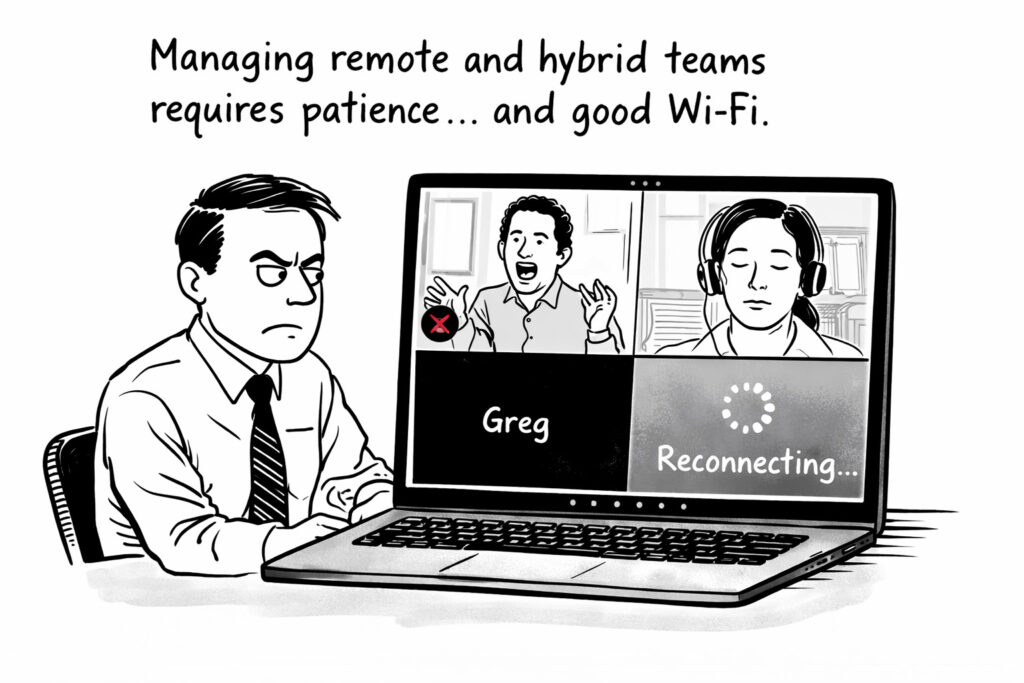
Managing remote and hybrid teams has become a permanent part of modern leadership. While flexible work brings enormous benefits, it also presents real challenges around communication, trust and performance. Understanding how to successfully lead in a hybrid environment is now a core leadership skill.
When your people are physically present, it’s easier to manage behaviours, boost morale, drive engagement and maintain motivation. You can see when Robert from sales is struggling with his workload. You notice his body language in meetings. You catch those hallway conversations that spark innovation or quietly signal disengagement.
In a remote or hybrid work environment, those signals are harder to spot.
You can’t always see workloads building. You don’t overhear the organic knowledge-sharing at the coffee machine. It becomes more difficult to gauge who is thriving and who is quietly checking out.
So the solution is simple… just tell everyone to come back to the office?
Not quite.
Many high-performing employees value flexibility. Offering work from home options can be critical to attracting and retaining top talent. The real question becomes: how do you lead remote or hybrid teams effectively?
1. Set Clear Expectations
If you want your team to deliver, be crystal clear about what you expect.
Remote work only works when expectations are clearly defined. This includes:
- How the role is fulfilled
- Communication requirements
- Availability expectations
- Flexibility boundaries
- Performance standards
Consider whether flexible start and finish times suit your business.
Some organisations allow employees to step out during the day provided work is completed.
Others prefer fixed hours to create clear boundaries.
Every business is different. Spell out what is acceptable and what is not from the beginning. Clarity prevents confusion, resentment and performance issues later.
Employers should also ensure their arrangements align with guidance from the Fair Work Ombudsman on flexible working arrangements.
2. Prioritise Clear and Consistent Communication
Communication is the foundation of successful remote team management.
Whether your team is onsite, remote or hybrid, they are not mind readers. Leaders must communicate clearly, consistently and deliberately.
Be specific about:
- Frequency of updates (daily, weekly, milestone-based)
- Preferred tools (phone, Teams, Zoom, Slack, email)
- Reporting structures
- Project check-ins
Equally important is tone. Without body language and vocal cues, written communication can easily be misinterpreted. Choose your words carefully and avoid assumptions.
Strong communication reduces misunderstandings, builds trust and keeps everyone aligned.
3. Build and Maintain Trust
Trust is non-negotiable in remote and hybrid workplaces.
If you don’t trust employees to work effectively when out of sight, ask why.
Is it discomfort with remote work?
Is it a communication breakdown?
Or are there genuine performance concerns?
If you’ve introduced flexible work arrangements, you must genuinely support them. Employees quickly sense when leaders are monitoring rather than trusting. That erodes morale and engagement.
If mistrust relates to specific individuals, assess the root cause:
- Are deliverables below standard?
- Were expectations clear?
- Does the employee need further training?
- Do you fully understand the time required for their tasks?
If flexibility is being abused, it must be addressed just as you would any other performance issue onsite. Flexibility is valuable, but it does not remove accountability.
4. Check In to Stay Connected
Checking in is not the same as managing performance.
When teams work remotely, connection can quietly fade. A quick call to ask, “How are you going?” makes a difference.
You are not calling to interrogate. You are calling to connect.
Employees who feel seen and supported are more motivated, more engaged and more productive. Never underestimate the impact of a genuine conversation that isn’t purely task-focused.
Leading Successfully in a Hybrid Work Environment
Remote and hybrid leadership requires intention. It requires boundaries, communication, accountability and connection.
If you stay focused on individuals, set clear expectations and maintain regular contact, you can keep your team engaged and performing regardless of location.
In fact, you may find hybrid work becomes a strength rather than a struggle.
If you need help setting up or refining your remote or hybrid work arrangements to support your business and your people, contact the HR Staff n’ Stuff team today. We’re here to help.